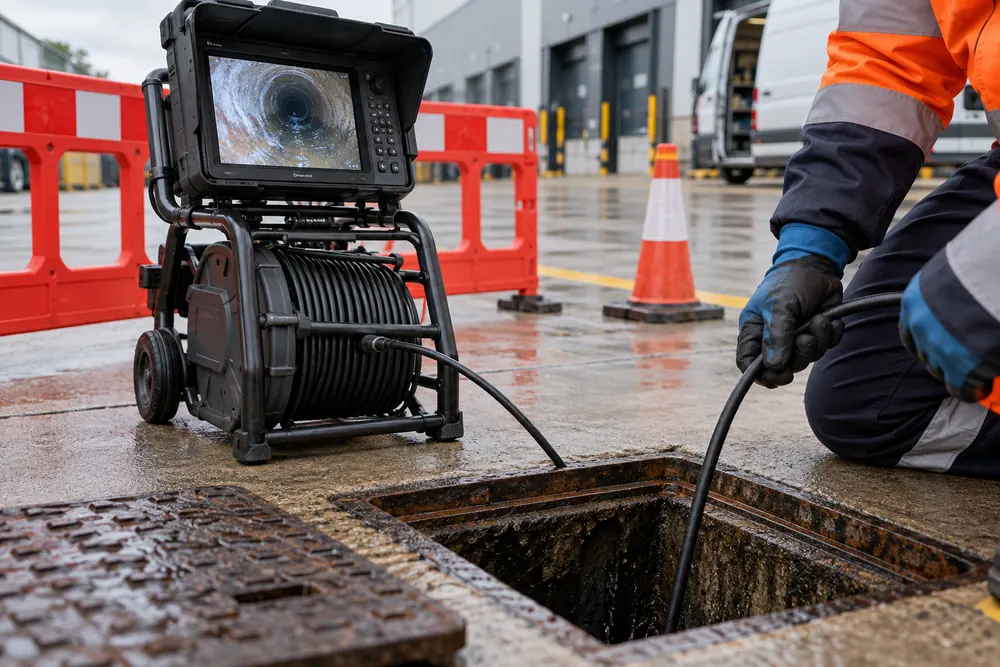
When A Camera Survey Is Useful
Consider a survey when a blockage keeps returning, a drain is suspected of leaking, or the drainage layout is poorly documented. A property acquisition or new lease can also make the condition of private drainage important. Explain the purpose before booking.
A quick look after clearance and a detailed condition survey for a commercial transaction have different reporting needs. Your solicitor, building surveyor or insurer may specify a particular deliverable that should be agreed in advance.
What The Camera Can Show
A camera can reveal visible cracking, open or displaced joints, root entry, deposits and standing water along the inspected route. It can also record changes in material and accessible branch connections. These observations help explain drainage performance, but they do not automatically prove the cause of every symptom.
A survey is limited to what the camera can see. Hidden pipe walls, inaccessible branches and sections under opaque water may need other investigation before conclusions are drawn.
Preparing For The Survey
Gather drainage drawings, previous reports and any details of repairs. Identify access covers and ask the site manager about loading restrictions, security and induction requirements. Tell us if there are known process discharges or sensitive operational areas.
Heavy deposits may have to be cleared before the camera can obtain a useful view. Cleaning and survey work should be separately understood in the scope, including what happens if access is missing or the inspection cannot be completed.
How The Inspection Proceeds
The survey begins by recording accessible start points and the agreed inspection scope. A suitable camera is advanced through each reachable run, with observations related to distance and direction. Where needed, locating equipment can help mark an accessible defect position from the surface.
The surveyor records obstructions and abandoned runs rather than presenting an incomplete inspection as a full picture. The final report should relate footage and observations to identifiable sections of the drainage system.
Understanding Your Report
Ask for footage, clear reference points and a written explanation of defects and limitations. For a formal condition assessment, agree whether coding to the WRc Manual of Sewer Condition Classification is required. That manual provides a recognised framework for recording observations.
A helpful recommendation distinguishes cleaning needs, structural problems and further investigation. A sketch showing inspected routes can support maintenance planning, but its accuracy and any unverified connections should be clear to the person relying on it.
Safety And Access Limits
Drain surveys are normally undertaken from surface access, with no need for anyone to enter a chamber. Where entry is being considered, the HSE confined-space guidance must inform the risk assessment. Restricted vehicle access, seized covers and fragile surfaces can also change the method.
Explain these constraints before attendance. Do not ask staff to enter a chamber or improvise access. Safe survey planning includes the people using the site as well as the person handling the camera.
What Affects Survey Cost
The number and length of runs, pipe sizes, access conditions and reporting requirements affect the quotation. Cleaning, tracing, traffic arrangements or a return visit can add work. A report for an acquisition may require more detail than a blockage investigation.
Ask which parts of the system are included, what files you will receive and how incomplete sections are handled. Comparing quotes on the same scope is more useful than comparing a headline price with no reporting specification.
Turning Findings Into A Decision
Not every observation requires excavation. Deposits may justify cleaning, a local defect may suit a patch, and a longer damaged section may warrant lining or replacement. Recommendations should be proportionate to the recorded condition and your use of the premises.
Keep the report with building records and share it with whoever authorises maintenance. If remedial work follows, a completion inspection can document the treated section and provide a useful baseline for future investigations.
CCTV Drain Survey FAQs
Does A CCTV Drain Survey Find Every Defect?
A CCTV drain survey records visible conditions only in the sections the camera can reach and see clearly. Deposits, standing water, missing access and obstructions can limit the result. The report should identify these gaps and explain whether cleaning, another access point or a different investigation is needed before a firm repair decision is made.
Do I Need A Drain Survey Before Taking A Lease?
A commercial drain survey can be useful before taking a lease where you may accept maintenance responsibility for private drainage. Ask your solicitor or building surveyor what evidence is needed and agree the reporting scope before booking. Existing plans, accessible inspection chambers and any known drainage problems will help define a useful inspection.