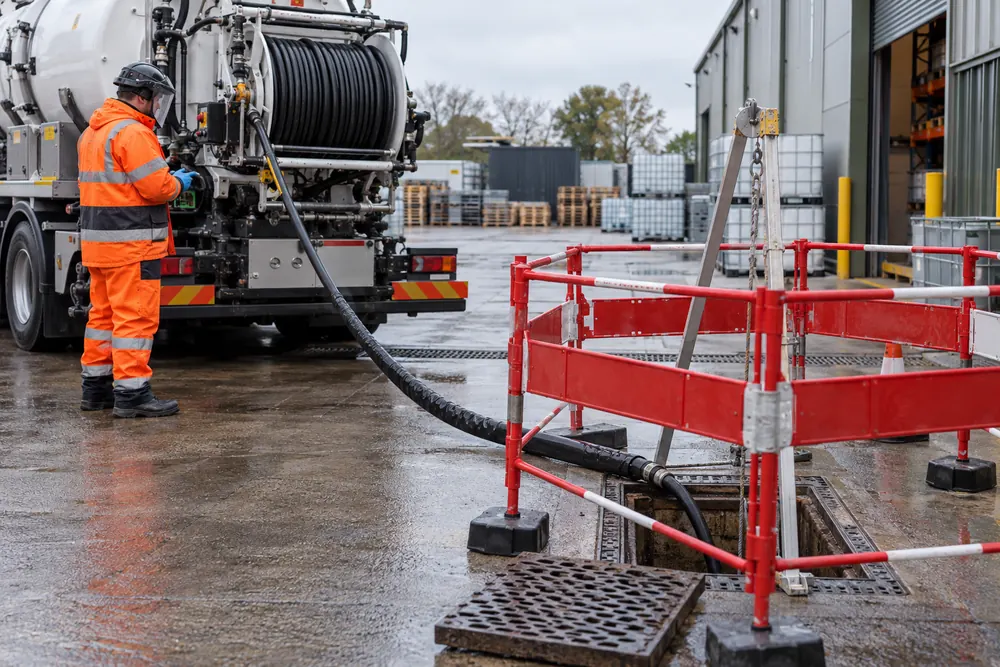
Where Jetting Fits
Jetting is used for suitable blocked drains, preparatory cleaning before a camera survey and planned removal of deposits. Commercial yards can collect grit, while food premises may experience grease accumulation downstream of kitchen outlets. Each situation requires assessment.
A pipe blocked by a structural collapse will not be repaired by water. The first decision is whether jetting is an appropriate cleaning method and whether the condition of the drainage presents a reason to stop or investigate further.
How The Equipment Works
A jetting hose carries water to a purpose-selected nozzle within the drain. The nozzle arrangement helps move along the pipe and dislodge material, which must then be managed rather than simply pushed into another problem area. Equipment choice depends on diameter, distance, bends and the nature of the deposit.
The operative needs control over the working area and water supply. A domestic pressure washer is not an interchangeable substitute for professional drain jetting equipment.
The Cleaning Sequence
First, identify the affected drainage route and available access points. Next, assess the pipe condition and the likely material causing the obstruction. The working area is separated from pedestrians and vehicles before equipment is set up.
Cleaning proceeds in controlled passes, with attention to the movement of waste and the response of the drain. A flow check follows, and a camera survey may be recommended where a defect or remaining deposit needs to be assessed.
Safe Water Jetting Practice
High-pressure water can cause serious injury. The Water Jetting Association publishes a Red Code covering safe working with jetting equipment in drains and sewers. Its guidance is relevant to planning, equipment checks and competent operation.
This reference is not a claim of membership or certification. Staff should stay outside the controlled work area and never handle an active hose. Known hazardous discharges and site-specific risks must be disclosed before the equipment is brought into use.
Protecting An Older Drain
Brittle pipes, displaced joints or sections already weakened by damage may not be suitable for routine cleaning without further inspection. Where there is reason to suspect poor condition, the method should be adapted or work stopped. Repeated blockage at the same point is a reason to consider a CCTV survey.
Tell us about previous repairs or lining because these details can influence equipment selection. The objective is useful cleaning without turning a maintenance issue into avoidable damage.
Managing Water And Removed Material
Jetting moves water and debris through a drainage system, so the downstream route matters. Silt, grease and other material may need to be recovered rather than allowed to accumulate elsewhere. Tell us about interceptors, pumps and sensitive process systems connected to the run.
Access to an appropriate water supply and space for equipment should be discussed in advance. Any waste taken from site requires an agreed disposal route and the relevant documentation for the material involved.
What Changes The Quotation
Pipe size, deposit type, working distance, access and the amount of cleaning required all influence cost. A planned visit with clear access differs from a blocked run beneath a busy loading area. Water provision, waste recovery and a follow-up inspection can also affect the scope.
Ask what is included and which findings would trigger a revised proposal. We assess the task rather than assuming every commercial jetting job takes the same time or uses the same equipment.
Planning Future Cleaning
A useful cleaning record notes which run was treated and what material was removed. If the same deposits return, investigate their source rather than relying only on more frequent jetting. Kitchens may need improved grease management, while yard drainage may need better control of grit.
Planned maintenance intervals should reflect actual accumulation, the consequences of a blockage and operating conditions. Review the schedule after inspections so it remains relevant as the premises or business activity changes.
Drain Jetting FAQs
Is Drain Jetting Suitable For Every Pipe?
Drain jetting is not suitable for every pipe in every condition. Fragile, collapsed or poorly connected sections may require inspection or repair before cleaning is attempted. The equipment and nozzle should match the pipe and deposits.
Tell us about known damage and previous lining so the proposed method can take those details into account.
Will Drain Jetting Stop Future Blockages?
Drain jetting can remove existing deposits, but it does not prevent new grease, silt or unsuitable materials entering the drain. It also cannot fix a structural defect. After cleaning, the findings should guide the next step, which may be improved waste handling, a planned cleaning programme or a CCTV inspection to investigate recurring trouble.