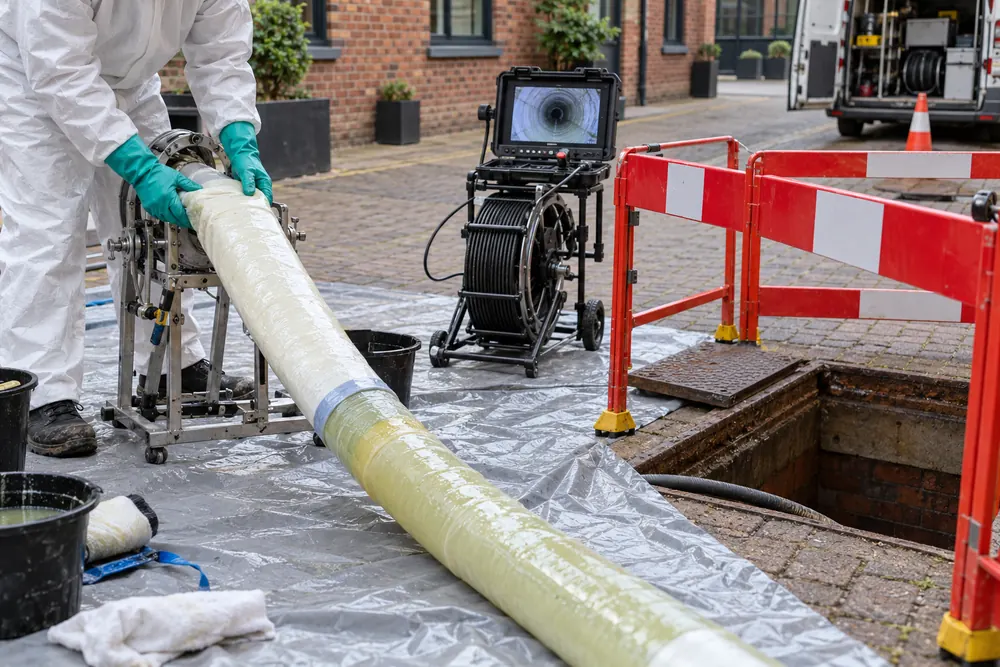
What Drain Lining Does
A lining system forms a new internal layer within an existing pipe. Depending on the selected system, a prepared liner is positioned and cured in place under controlled conditions. Local patch treatments may address a defined defect, while a longer liner can treat a continuous section.
The existing host pipe must be suitable for the chosen approach. The proposal should explain the start and finish points and how any connecting branches will be kept open or reinstated.
When Lining May Be Suitable
Cracking, certain joint defects and root entry may be candidates for lining after the underlying condition is assessed. The method can be attractive beneath surfaces where excavation would be disruptive. Suitability still depends on shape, access, diameter and remaining pipe condition.
Lining should not be sold as a way to correct every hydraulic or structural problem. A displaced or collapsed section may need a different intervention before any lining can be considered.
The Inspection Comes First
A CCTV survey should identify the relevant defects, accessible length, connections and restrictions. Deposits or standing water can hide important information, so cleaning or further investigation may be needed before the design is settled. Ask whether the footage covers the entire proposed treatment length.
An incomplete inspection should lead to a stated limitation, not an assumption that the unseen pipe is suitable. Existing repair records can also help identify materials or changes along the run.
Preparation And Installation
First, the agreed run is cleaned and checked so the liner can be installed against a suitably prepared surface. Next, the installer verifies the dimensions and positions the selected system. Curing follows the product-specific method, with operational controls suited to the material and site.
Connections are dealt with as specified in the proposal. A completion inspection then records the treated section. Each stage matters because a lining installed over unresolved deposits or an unidentified connection can create further problems.
System Specifications And Site Safety
Ask for the lining product specification and the installation and acceptance criteria that apply to it. Do not assume every resin system or repair approach uses the same technical standard. Chemical handling, access and drainage isolation require a site-specific plan.
Construction work may engage CDM 2015 duties, depending on the scope. Where chamber entry is proposed, separate confined-space controls are needed. Product information should be available to the person responsible for approving the work.
Limits To Discuss Before Approval
A liner takes up some internal space, so the design needs to consider the existing diameter and required drainage performance. It will not normally change the original gradient or recover a completely collapsed passage. Branch connections, bends and transitions can affect feasibility.
Tell the installer about process discharges and operating temperatures so product suitability can be assessed. Ask which defects the method addresses, what remains untreated and when excavation would be the more appropriate choice for the premises.
What Influences Lining Cost
The treated length and diameter, access points, preparation needed and selected curing system affect the quotation. Root removal, connection reopening, wastewater management and inspection can add work. A local patch and a full run lining are different scopes, so compare them against the recorded defects.
Ask whether completion footage and any product or installation warranty terms are included. The amount of ground disturbance avoided is useful context, but the decision should still rest on technical suitability.
The Handover And Future Maintenance
Keep the pre-installation survey, product information, installation record and final footage with building maintenance records. The handover should identify the lined section and any connections treated, along with limits on future cleaning methods if specified by the system supplier. A lined section still needs sensible waste handling and maintenance.
If another blockage develops, share the lining details before any mechanical work is attempted so the next contractor can choose an approach appropriate to the installed system.
Drain Lining FAQs
Can Drain Lining Fix A Collapsed Pipe?
Drain lining generally needs an accessible host pipe with a suitable shape and passage for installation. A collapsed pipe can prevent that and may need excavation or another repair first. A camera inspection and site assessment should establish what is feasible.
Do not approve lining on the assumption that it will rebuild any missing or flattened section.
Will Drain Lining Close Off Branch Connections?
Drain lining must account for branch connections so the completed drain continues to serve the intended outlets. The proposal should identify known connections and explain how they will be protected or reopened where required. Completion inspection is useful evidence of the result.
Unmapped or inaccessible branches should be recorded as limitations before work is agreed.